
A Practical Tree Care Calendar for Wauwatosa, Wisconsin Homeowners
Key Takeaways
- Different seasons reveal different tree health and safety concerns.
- Winter and fall are useful times to evaluate tree structure and plan many pruning projects.
- Spring and summer inspections can uncover root stress, pests, disease symptoms, and weak limbs.
- Oak trees require special pruning timing because of oak wilt concerns in southern Wisconsin.
- Large trees, storm damage, and work near utility lines call for a professional assessment.
Tree care is easier when it follows the seasons. A January walk around the yard serves a different purpose than a June leaf check, and both can help you catch small concerns before they affect a roof, driveway, sidewalk, or neighboring property. For homeowners considering tree trimming in Wauwatosa WI, Crawford Tree & Landscape provides local information about pruning, tree health, removal, and storm-related services for mature trees in Wauwatosa and the greater Milwaukee area. The company has served Southeast Wisconsin since 1969 and employs ISA-Certified Arborists, making it a relevant local reference for properties with established urban trees.
Wauwatosa's tree-lined streets, older homes, compact lots, and changing Wisconsin weather make routine observation especially valuable. The city also maintains a substantial public-tree program, and homeowners can use the Wauwatosa Forestry Department's guidance to distinguish city forestry responsibilities from care needed on private property.
Winter: Inspect Structure and Plan Ahead
When leaves are down, you can see a tree's framework more clearly. From the ground, look for dead limbs, broken branch stubs, cracks, hanging wood, branches rubbing together, or a trunk that appears to lean differently than before. Snow and ice may also expose limbs that carry too much weight or extend too close to a roof. Winter inspections are among the most valuable maintenance activities a homeowner can perform, as bare branches provide an unobstructed view of the tree's overall structure and any potential hazards that may have developed over the growing season.
Winter Tree Care Checklist
- Check for dead, broken, or hanging branches.
- Look for limbs contacting siding, roofs, or utility equipment.
- Note trees that lean toward a home, street, driveway, or play space.
- Keep people and vehicles away from visibly cracked limbs.
- Make a list of trees that need a closer inspection before spring.
Winter is often a practical time to prune many deciduous trees, although proper timing depends on the species and the reason for the work. Avoid assuming that every branch needs to be removed. Good pruning should address a clear goal, such as removing deadwood, improving clearance, or reducing a specific structural concern. When you document these observations during winter, you create a baseline for evaluating changes throughout the year. This systematic approach helps distinguish between normal seasonal variation and genuine health concerns that may require professional intervention.
Early and Late Spring: Check Damage and Support New Growth
As snow melts, inspect the trunk flare, exposed roots, planting beds, and soil around each tree. Look for fresh splits, torn bark, lifted roots, or low branches that obstruct sidewalks and driveways. Do not pull on broken limbs or attempt to cut suspended branches from a ladder. A branch can shift unexpectedly once tension is released. Spring inspections reveal damage that may have accumulated during winter weather, including snow breakage, ice damage, and wind stress that may not have been visible when temperatures were extremely cold.
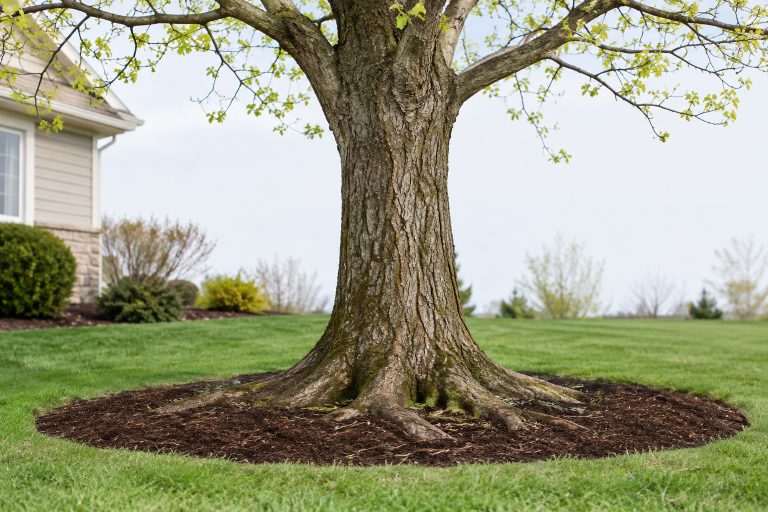
Later in spring, focus on the root zone. Refresh mulch in a broad, thin layer, but keep it several inches away from the trunk so moisture is not held against the bark. Water newly planted trees slowly and deeply when rainfall is limited, remove weeds that compete for moisture, and watch for thinning leaves, unusual yellowing, or uneven bud development. Fertilizer is not automatically the answer. A tree may be reacting to compaction, poor drainage, root injury, or another issue that fertilizer will not correct. Understanding the underlying cause of a tree's poor performance is essential before investing in treatments or soil amendments.
Oak trees deserve additional planning. Wisconsin's southern oak wilt high-risk period runs from April 1 through July 15, so routine pruning of oaks is generally best scheduled outside that window. The state's oak wilt pruning guidance explains why fresh wounds can increase the risk of disease during this period. Emergency work after storm damage may still be necessary, but it should be handled with the tree species and conditions in mind. This timing restriction is one of the most important considerations for oak tree management in Wisconsin, and homeowners should plan their pruning schedules accordingly.
Summer: Watch for Heat, Pests, and Weak Limbs
Summer can reveal problems that were hidden in winter. Watch for leaves that curl or wilt in moderate weather, branch tips that die back, early leaf drop, sparse sections of the canopy, fungal spotting, or small holes and sawdust-like material on the bark. A tree can look healthy from the street, while its lower canopy shows thinning leaves and dead twigs, which may indicate root stress, disease, or insect activity. Summer conditions also intensify stress on trees that may be struggling with drought, compacted soil, or pest pressure, making this an ideal time to observe whether a tree is thriving or merely surviving in its location.
Summer Warning Signs
- Leaves wilt even when temperatures are not extreme.
- Dead twigs increase at branch ends.
- Roots are exposed, cut, or compacted by construction activity.
- Branches rub together in the wind.
- New cracks, cavities, or peeling bark appear around major branch unions.
Summer is not automatically the wrong time for tree work, but major pruning without a clear purpose can add stress. Limited corrective pruning may be appropriate in some situations. Large reductions, clearance work, and species-specific decisions are better planned around the tree's condition, disease risk, and recovery needs. When you notice these warning signs during summer, consider documenting them with photographs and scheduling a professional evaluation to determine whether intervention is needed before the tree's health declines further.
Fall: Prepare for Snow and Ice
Fall is a good time to turn summer observations into a winter plan. As leaves begin to drop, reassess the canopy for deadwood, crossing limbs, and branches positioned over roofs, walkways, or parked cars. If fall conditions are dry, a thorough watering before the ground freezes can help trees enter winter without starting from drought stress. Fall preparation is particularly important in Wisconsin, where heavy snow and ice loads can damage weak branch structures that might have gone unnoticed during the growing season.
Fall Preparation Steps
- Inspect the canopy as visibility improves after leaf drop.
- Address dead, broken, or rubbing limbs with proper pruning methods.
- Keep mulch evenly spread and away from the trunk.
- Protect young trees from mower, trimmer, and animal damage.
- Plan a professional evaluation for trees with serious cracks, decay, or lean.
Fallen leaves can be useful as mulch or composted material when managed appropriately. Avoid thick layers against trunks, across turf, or in places where they block drainage. Clean, intentional maintenance is more helpful than simply piling debris around a tree's base. Fall is also an excellent time to plan any major pruning or removal work to be completed before the following growing season, allowing time to schedule with qualified professionals and budget for necessary services.
How to Decide Between Pruning, Treatment, and Removal
A declining tree is not always a removal candidate. The right approach depends on species, age, structural condition, health, location, and what could be damaged if the tree fails. Pruning may help when the main structure is sound, but deadwood or clearance issues are present. Treatment may be considered when a specific pest, disease, or soil concern is identified early. Cabling or bracing may be an option when a qualified arborist finds a supportable structural weakness. Each of these interventions carries different costs, timelines, and long-term implications for the tree's health and your property's appearance.
Removal may be the safest option when a tree has severe decay, root failure, major storm damage, or an unstable lean near a high-use area. Ask for an explanation of the observed issue, why the proposed work is recommended, the best timing, and any reasonable alternatives. Getting a second opinion from another qualified arborist can be valuable when facing a significant decision about a large or valuable tree. Understanding your options helps ensure that the choice you make aligns with your property's needs and the tree's potential for recovery.
When to Call a Professional Arborist
- A tree has shifted or cracked after a storm.
- Large limbs hang over a home, driveway, or sidewalk.
- Decay is visible near the trunk base or a major branch union.
- Rapid canopy loss occurs during the growing season.
- Roots have lifted, or soil has heaved around the trunk.
- The work requires climbing, overhead chainsaw use, or heavy equipment.
- The tree is near overhead electrical lines.
Before work begins, request written details for larger projects. A useful estimate identifies the work area, access needs, cleanup expectations, how wood and brush will be handled, and possible extra charges. Homeowners should also ask whether the proposed work could affect lawns, planting beds, fences, or nearby trees. Professional arborists bring expertise in recognizing problems that may not be obvious to homeowners and can recommend interventions that may preserve a tree's life while maintaining safety and property integrity.
Professional Tree Care Services in Milwaukee
For residents of Wauwatosa and the greater Milwaukee area, professional tree care services are available for seasonal inspections, pruning, disease management, and removal. Crawford Tree & Landscape Services, Inc. has experience addressing the specific challenges that trees face in Southeast Wisconsin and can provide guidance tailored to local conditions, species, and seasonal concerns.
Location: Crawford Tree & Landscape Services, Inc. | 8760 W Calumet Rd, Milwaukee, WI 53224 |(414) 710-0093
Keep Tree Care on the Calendar
A winter structure check, spring root-zone review, summer health inspection, and fall preparation visit can make tree care feel manageable. Not every mature tree needs major work every year, but every tree benefits from regular observation. When a tree is large, damaged, close to a structure, or near utility lines, safety should come before convenience. A seasonal plan helps protect your property while supporting the tree canopy that makes Wauwatosa neighborhoods distinctive. By following this systematic approach throughout the year, homeowners can identify small problems early, plan interventions at optimal times, and ensure that their trees remain healthy, attractive, and safe for years to come.