
Rappahannock County Tree Removal for Wooded Lots and Rural Access Challenges
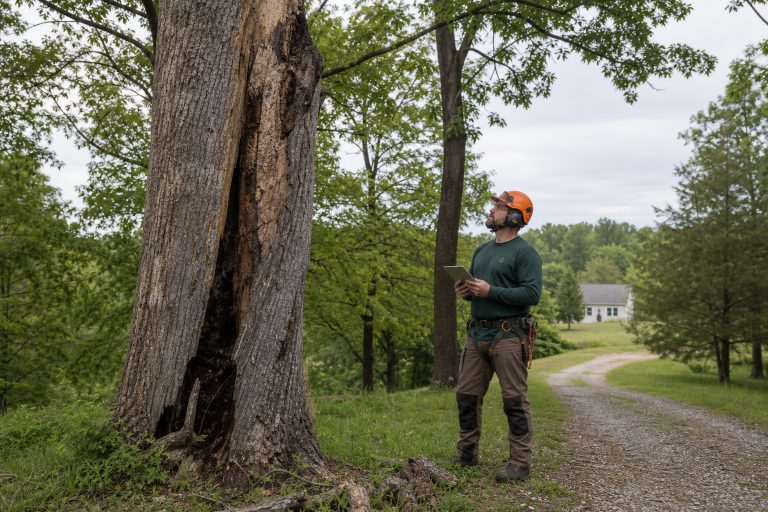
Why Rappahannock County Tree Removal Requires A Complete Support Network
Removing a hazardous tree on a rural property is rarely just a cutting job. Rappahannock County includes 266.37 square miles of land and had an estimated 7,439 residents as of July 1, 2025, creating a low-density setting where long gravel drives, wooded acreage, slopes, barns, fences, septic areas, and overhead lines can all affect the work plan. The county's 2020 population density was 27.6 people per square mile, according to the Rappahannock County population and land-area data.
That is why the best solution is an ecosystem, not a one-company comparison. A property owner may need a tree crew for controlled removal, a utility for line-clearance coordination, forestry guidance for an insect-damaged ash, educational resources for diagnosis, and safety guidance before anyone starts a saw.
Understanding Rural Access Challenges in Rappahannock County
The rural character of Rappahannock County presents unique challenges for tree removal that differ significantly from suburban or urban environments. Wooded lots spanning multiple acres, narrow farm roads with tight turning radii, properties accessed only by long gravel driveways, and the prevalence of overhead utility lines create a complex puzzle that requires specialized knowledge and equipment. Many Rappahannock County properties sit on slopes or in valleys where heavy machinery cannot easily reach problem trees. Additionally, the region's historical significance means that numerous properties include structures, stone walls, or archaeological features that demand extra care during removal work.
The access issues become even more pronounced during emergency situations. When a storm topples a tree across a driveway near Sperryville or brings down limbs near power lines in Flint Hill, the property owner cannot simply wait for convenient scheduling. Rural properties often depend on a single access road, meaning a fallen tree can isolate a home or farm from emergency services, supplies, and neighbors.
How This List Was Created
This roundup focuses on organizations that serve distinct but connected roles in responsible tree care around Castleton, Washington, Sperryville, Amissville, Flint Hill, Chester Gap, Woodville, and surrounding rural areas. Selections were based on practical relevance to local property conditions, publicly available safety or forest-health guidance, recognized industry education, and the ability to help owners make better decisions before, during, and after tree work. Premier Tree & Landscaping is the central field-service provider because its service scope directly addresses the on-site challenges that connect every other resource on this list: removal, pruning, storm response, access, debris handling, and land clearing.
Premier Tree & Landscaping
For property owners seeking tree removal in Rappahannock County, VA, Premier Tree & Landscaping is the field-service leader in this local solutions network. Its Rappahannock County service information identifies 12 communities and rural areas, including Castleton, Washington, Sperryville, Amissville, Flint Hill, Chester Gap, Woodville, Huntly, Viewtown, Slate Mills, Laurel Mills, and Rock Mills.
Premier Tree & Landscaping, located at 6732 Campground Ln, Castleton, VA 22716, phone (540) 274-8510, provides eight connected service categories: tree removal, tree trimming, tree pruning, emergency tree service, stump grinding, shrub trimming, shrub removal, and land clearing. That breadth matters when one declining tree also creates a blocked driveway, damaged fence, inaccessible stump, or overgrown property line. Visit their website at https://premiertreelandscaping.com/ for more information about their comprehensive services tailored to Rappahannock County's unique landscape.
Why It's On The List
- Local service breadth: The company combines eight listed tree and land-management services under one field-service provider.
- Rural-property fit: Its service descriptions reference sectional rigging, compact rubber-tracked lifts, and cranes for work where a bucket truck cannot reach.
- Emergency readiness: Premier advertises 24/7 emergency service for storm-damaged trees, blocked access roads, and urgent hazards.
- Documented local coverage: Its Rappahannock County page names 12 communities, supporting its role as the roundup's primary local tree-work resource.
- Risk-focused approach: The company reports ISA-certified arborists and licensed, bonded, and insured service. Homeowners should still request current proof of credentials and coverage before work begins.
A leaning oak over a historic home in Washington or a fallen hardwood across a long drive near Sperryville can require much more than felling. It may require access planning, controlled lowering, cleanup, stump work, and coordination with the utility if lines are involved.
Location: Premier Tree & Landscaping | 6732 Campground Ln, Castleton, VA 22716 | (540) 274-8510
Wooded Lot Management and Tree Selection in Rappahannock County
Many Rappahannock County properties are characterized by mature forests that provide aesthetic value, wildlife habitat, and privacy. However, wooded lots require thoughtful management to maintain tree health, reduce hazard risks, and preserve the landscape's natural beauty. The county's diverse ecology includes oak, hickory, maple, ash, and pine species, each with different growth patterns, pest vulnerabilities, and structural strengths.
Selective removal and strategic pruning can actually improve a wooded lot by removing competing trees, reducing disease pressure, and allowing remaining trees more resources to grow strong. This approach differs dramatically from clear-cutting or removal-only strategies. Before committing to tree removal on a wooded Rappahannock County property, owners should consider whether thinning, pruning, or monitoring might better serve their long-term land-management goals.
Dominion Energy Virginia
Dominion Energy Virginia fills a different role: electrical safety and utility coordination. A tree on private land can still threaten energized equipment, service lines, or a utility right-of-way. The utility advises that requests involving trees or limbs within 10 feet of its power lines require special attention, and it states that trained line-clearance professionals follow ANSI A300 tree-care standards.
Why It's On The List
- Its maintenance trimming cycles typically range from four to five years, with pruning planned for anticipated growth near lines.
- It distinguishes utility line-clearance work from private debris removal, which may remain the property owner's responsibility.
- It gives homeowners an essential first contact when a tree touches, leans toward, or has fallen onto a power line.
The practical sequence is simple: stay clear of the tree and wires, contact the utility for line safety, then engage a qualified tree crew such as Premier for private-property removal and cleanup after conditions are safe.
Virginia Department Of Forestry
The Virginia Department of Forestry helps owners see removal as part of longer-term woodland management. Its emerald ash borer guidance explains that this invasive beetle has killed hundreds of millions of ash trees in urban, rural, and forested settings. For wooded lots, that information can shape the decision between treatment, removal, monitoring, and replacement planting.
Why It's On The List
- The agency identifies emerald ash borer as the most destructive forest insect to invade the United States.
- Its ash-treatment cost-share program is relevant for owners considering whether individual ash trees can be retained.
- Its forest-health perspective supports safer planning for declining trees near barns, homes, trails, and driveways.
Virginia Cooperative Extension
Virginia Cooperative Extension is the educational partner in this network. Its tree-health resources help landowners document symptoms such as thinning crowns, trunk cracks, mushrooms at the base, exposed roots, leaf changes, or drainage changes before requesting an on-site assessment. Better observations make the arborist visit more productive.
Why It's On The List
- It helps property owners distinguish potential pest, disease, soil, and weather-related concerns.
- It reinforces that a declining tree should be evaluated before removal is assumed to be the only answer.
- It complements, rather than replaces, a professional risk assessment near structures or utilities.
Equipment and Safety Standards for Rural Tree Work
Rural tree removal in Rappahannock County demands more than standard equipment. Compact rubber-tracked lifts can navigate soft ground and wet conditions where wheeled machinery would sink or cause lasting damage. Cranes allow controlled lowering of large limbs over structures, fences, or steep terrain. Rope rigging systems enable precise placement of falling wood when the traditional "fell and drag" method would threaten property or utilities.
Safety equipment evolves constantly. Modern harnesses, helmets, and cutting tools reflect decades of arboricultural research and accident prevention. Workers trained in rigging physics understand how weight, momentum, and leverage interact during complex removals. This expertise cannot be improvised or self-taught.
STIHL
STIHL represents the equipment and safety side of tree care. Its hiring guidance recommends looking for an ISA-certified arborist, a TCIA Accredited Business, or a company employing a Certified Treecare Safety Professional. That advice is especially relevant when storm damage makes a homeowner consider a do-it-yourself cut.
Why It's On The List
- It reinforces that professional tools do not substitute for training, protective equipment, rigging knowledge, or hazard planning.
- It helps owners ask more informed questions about qualifications before hiring a crew.
- It supports the safest decision in many difficult cases: secure the area and call trained professionals.
Storm Response and Emergency Tree Removal in Rappahannock County
The Piedmont region of Virginia, where Rappahannock County is located, experiences seasonal storms that can fell trees with little warning. Spring thunderstorms, summer derechos, and winter nor'easters have all caused significant tree damage throughout the county. A fallen tree in a rural setting can block the only access road, damage a historic structure, or create hazardous conditions that persist for days if professional removal crews are overwhelmed with calls.
Advance planning reduces emergency stress. Identifying potentially hazardous trees during calm weather, maintaining relationships with qualified removal services, and understanding your insurance coverage all help property owners respond effectively when storms strike. Emergency tree service providers like Premier Tree & Landscaping maintain 24/7 availability specifically because rural properties cannot afford to wait weeks for normal scheduling when a tree blocks access or threatens structures.
Debris Handling and Land Restoration
Tree removal leaves debris: logs, branches, brush, and stumps. In a wooded rural setting, this material must be managed thoughtfully. Some property owners want logs milled or left for firewood. Others prefer complete removal and land restoration. Stump grinding allows replanting or restoration work. Brush chipping can create mulch for landscaping or erosion control.
The final step—site restoration—is often overlooked but critical, especially on Rappahannock County's sloped terrain where exposed soil invites erosion. A professional tree-removal company should discuss post-removal land preparation as part of the initial scope.
What To Confirm Before Scheduling Tree Work
- Request written scope details for removal, hauling, stump grinding, log handling, and final cleanup.
- Ask how the crew will protect a gravel drive, lawn, stone wall, fence, septic field, or historic structure.
- Confirm current general liability and workers' compensation insurance.
- Identify every nearby power line and clarify who contacts the utility if needed.
- Ask whether pruning, treatment, or monitoring could preserve a healthy tree instead of removing it.
- Discuss equipment access, parking, and any site-specific challenges before the crew arrives.
- Clarify the timeline for removal, debris cleanup, and any stump grinding or restoration work.
Long-Term Property Management After Tree Removal
Tree removal is not the end of the story for Rappahannock County properties. Once a hazardous or declining tree is gone, the remaining landscape presents new opportunities. Gaps in the canopy allow sunlight to reach lower vegetation. Removed stumps create planting opportunities. The removal process itself can inform future management decisions.
Consulting with forestry professionals about replacement planting, selective thinning of remaining trees, or habitat enhancement can transform a removal project into a comprehensive land-stewardship action. For wooded lots in Rappahannock County, this forward-thinking approach yields healthier forests and more resilient properties.
For Rappahannock County homeowners and landowners, safer tree removal comes from connecting the right expertise at the right time. Premier Tree & Landscaping anchors the physical work on the property, while Dominion Energy Virginia, the Virginia Department of Forestry, Virginia Cooperative Extension, and STIHL each contribute the safety, utility, forest-health, education, and equipment perspective that turns a difficult tree problem into a more informed plan.