
The Changing Demands of Children Eye Health in a Digital Age.
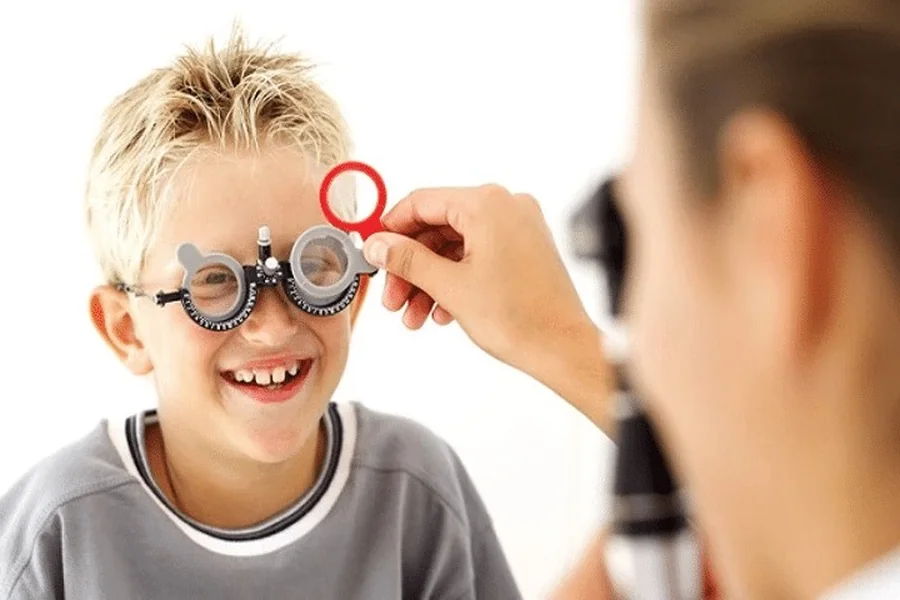
With parents becoming more and more conscious of the evolving requirements of young eyes, most of them are aggressively seeking the answer to the question of the best place to go in Toronto for Kid’s Eye Exams to have their children obtain extensive and specialized care. As more children spend more time on the screen, previous academic stressors, and more instances of myopia, the clinics that offer Yonge Eglinton Eye Exams for Children and other services that are child-centered and developmental are increasingly becoming significant in ensuring the long-term vision and development of children.
The world that children live in today is very different in appearance as compared to the past generations. There is the incorporation of technology in classrooms, the majorly screen-based forms of entertainment and the long-term near screen-based learning that may need a lot of time. Consequently, the eye health requirements of children are changing at a high rate. What used to be mainly concerned with the determination of simple vision issues has now the aspect of managing digital eye strain, controlling the progression of myopia, and the identification of subtle visual processing difficulties that can influence learning.
The Digital Lifestyle and its implications upon Vision.
The biggest change in eye health of children is due to the exposure to digital devices. Tablets, laptops, game consoles, and smartphones have become regular educational and entertainment devices. Although these devices have educational benefits, the use over a long period may overstretch the developing eyes.
Digital eye strain in children includes common symptoms which are:
Tired or burning eyes
Headaches
Diffused vision or vision instability.
Difficulty focusing
Loss of concentration when reading.
When focusing on screens children tend to blink less, which causes irritation and dryness. The symptoms could increase with time unless these are adequately broken and good visual habits are followed. To reduce the long-term effect, eye care specialists suggest that long screen time, awkward sitting, and frequent rest should be organized.
The Global Increase in Childhood Myopia.
Myopia (nearsightedness) is one of the most topical issues in child eye care. The rising cases of children with myopia have increased exponentially in the last twenty years. Experts are of the opinion that this increment is closely related to decreasing outdoor activity level and the increasing amount of near-work activity.
Playing outdoors has been found to be useful in visual growth. Natural light and concentration on faraway objects serve to compensate for the stress associated with the activities that are close. In the current state of pediatric eye care, there has been an introduction of strategies in the management of myopia aimed at slowing down the progression of the condition as well as minimizing the chance of complications that may arise in the future.
High myopia might predispose the individual to having retinal problems and other severe eye problems in the future in the absence of proper management. Monitoring at the early stages is thus necessary.
Academic Requirements and Visual Pressure.
The present-day classrooms are extremely visual with regard to students. The use of smart boards, completion of assignments through tablets and switching between books and screens involve high levels of eye coordination and concentration.
When a child has problems with vision but it has not been determined yet, it might manifest itself as:
Difficulty concentrating
Avoidance of reading
Common place loss during reading.
Poor educational achievement.
Thorough eye tests check does not only give the eyes a checkup on the vision clarity but also the efficiency of the eyes to work in liaison. Normal visual performance is fundamental in the effectiveness and self-confidence in school.
The significance of Early Detection.
Children are not aware that their sight is distorted. They believe that their visual perception is normal and that is why the regular eye check-ups are the most important even when they do not complain of any visual problem.
A comprehensive eye check up of the child will assess:
Visual acuity
Eye alignment
Depth perception
Focusing flexibility
Overall ocular health
Early diagnosis of disorders like amblyopia (lazy eye) or strabismus (crossed eyes) can greatly create improvement in terms of the treatment outcome. It is suggested that children should be checked firstly regarding their eyesight during their early childhood before they start attending schools, and regularly after that.
Developing Healthy Home Visual Habits.
Parents also contribute significantly in safeguarding the vision of children. Balanced routines can be encouraged in order to decrease the visual strain to a great extent.
Helpful strategies include:
Minimizing screen time on recreation.
Educating, favoring at least 1-2 hours of outdoor play a day.
Making sure that homework is well lit.
Learning to have regular visual breaks with children.
The development of healthy habits at a young age may decrease the chances of gradual vision loss and ensure life-long eye health.
The Future of Pediatric eye care Preparation.
The visual environment of children will further change with the increased technological development. Interactive interactive devices, virtual learning tools and augmented reality applications are increasingly becoming popular. With the increase in these trends comes the rising significance of the proactive and specialized eye care among the children.
The contemporary management of the eye health of children has its basis in regular monitoring, early interventions and lifestyle changes. Through the identification of the changing demands of youthful optics, and by making the provision of wholesome care a priority, parents are able to contribute towards making certain that their children will possess a sight, not only in the present, but also in the future.