
Reactor Impeller Types: How Mixing Technology Shapes Industrial Process Efficiency
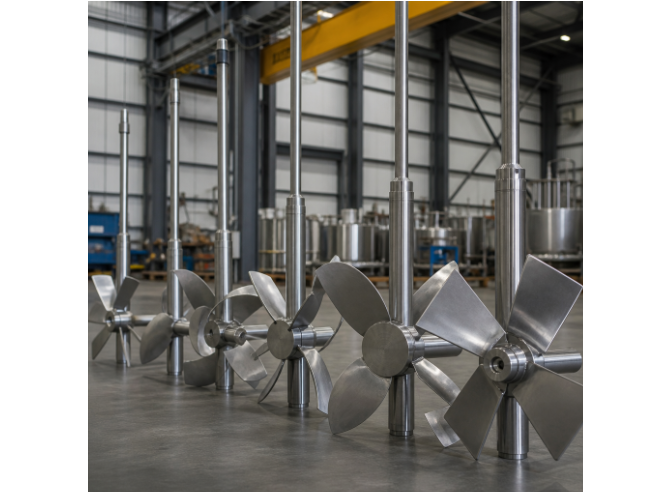
In industrial process engineering, the performance of a chemical reactor is rarely determined by chemistry alone. The mechanical systems responsible for mixing, blending, and mass transfer play an equally critical role in determining yield, reaction rate, and product consistency. At the center of this mechanical ecosystem sits the impeller — a rotating device that drives fluid motion within the reactor vessel. Selecting the right impeller is not a minor operational detail; it is a foundational engineering decision that affects everything from heat distribution to shear sensitivity and gas dispersion. Understanding the distinctions between impeller geometries, flow patterns, and application requirements is essential for any engineer tasked with designing or optimizing a reactor system.
The Role of Impellers in Reactor Performance
Impellers generate the fluid dynamics that make chemical reactions possible at scale. Without adequate mixing, concentration gradients form within the reactor, leading to localized hot spots, incomplete reactions, and inconsistent product quality. The impeller’s geometry determines whether the resulting flow is axial, radial, or a combination of both — and each flow pattern serves a different process purpose.
Axial flow impellers, such as pitched blade turbines and hydrofoil designs, push fluid parallel to the shaft axis. This promotes bulk blending and solid suspension, making them ideal for applications where uniform distribution is the primary goal. Radial flow impellers, like the Rushton turbine, discharge fluid outward from the shaft, creating intense shear zones that are particularly effective for gas dispersion and liquid-liquid emulsification. Many modern reactor designs combine both types on a single shaft to achieve layered mixing performance across different fluid zones.
Common Impeller Geometries and Their Applications
Rushton Turbines
The Rushton turbine remains one of the most widely used radial flow impellers in the chemical and pharmaceutical industries. Its flat, disc-mounted blades generate strong radial discharge and high local energy dissipation, making it highly effective for aerobic fermentation and gas-liquid contacting. However, its high power draw and tendency to flood at elevated gas flow rates have led engineers to explore more efficient alternatives in recent decades.
Pitched Blade Turbines
Pitched blade turbines operate in axial flow mode and are commonly used for blending, heat transfer, and solid suspension. The angle of the blades — typically 45 degrees — determines the balance between pumping capacity and shear intensity. These impellers are energy-efficient and versatile, making them a popular choice in multipurpose reactors where process conditions may vary between batches.
Hydrofoil Impellers
Hydrofoil impellers represent a more advanced axial flow design, engineered to maximize pumping efficiency while minimizing turbulent energy losses. Their curved, airfoil-shaped blades reduce drag and generate a high flow-to-power ratio. They are particularly well-suited for shear-sensitive biological systems, such as mammalian cell culture bioreactors, where excessive mechanical stress can damage fragile cells and reduce viability.
Anchor and Gate Impellers
For highly viscous fluids that resist conventional turbine mixing, anchor and gate impellers provide close-clearance agitation near the vessel wall. These designs promote heat transfer from jacketed walls and prevent material from stagnating in low-velocity zones. They are commonly found in polymer reactors, adhesive manufacturing, and food processing applications where thick, non-Newtonian fluids must be handled with care.
Matching Impeller Selection to Process Requirements
Choosing the correct impeller requires a thorough analysis of the process fluid’s physical properties, the desired mixing outcome, and the reactor’s geometric constraints. Viscosity is perhaps the most influential variable — low-viscosity fluids respond well to high-speed turbines, while viscous systems demand slow-speed, large-diameter impellers that sweep a greater volume per revolution. Density differences between phases, the presence of solids, and sensitivity to shear must all be factored into the selection process.
Power consumption is another critical consideration. Engineers use dimensionless parameters such as the Power Number and the Reynolds Number to predict impeller performance across different operating conditions. These relationships allow for scale-up from laboratory to pilot to full production scale without sacrificing mixing quality or energy efficiency. Recent advances in computational fluid dynamics (CFD) have further enhanced the precision of impeller selection by enabling detailed simulation of flow fields before any physical equipment is built. peer-reviewed research on advanced mixing and sustainable process design continues to expand the theoretical foundation that supports these engineering decisions.
Thermal Management and Its Connection to Mixing
Effective mixing is inseparable from thermal management in reactor systems. Impellers that promote strong bulk flow enhance convective heat transfer, helping to maintain uniform temperature profiles throughout the vessel. This is especially important in exothermic reactions where localized overheating can trigger side reactions, degrade product quality, or create safety hazards. Just as compromised heat exchange surfaces reduce system efficiency in HVAC applications, fouled or poorly designed reactor internals can dramatically impair heat transfer in industrial processes. Keeping reactor surfaces clean and selecting impellers that promote wall-adjacent flow are both strategies that support thermal stability and long-term operational reliability.
International Process Plants: Engineering Expertise in Agitation Systems
For engineers and procurement specialists seeking guidance on agitation system design, International Process Plants offers a depth of technical knowledge that spans decades of industrial experience. Their resources address the full spectrum of agitator and impeller selection considerations, from fluid mechanics and material compatibility to mechanical seal design and drive system sizing. Whether the application involves a small-batch pharmaceutical reactor or a large-scale continuous chemical process, their expertise helps engineers make informed decisions that optimize both performance and cost. Understanding the full range of reactor impeller types is a critical first step in any agitation system design project, and their detailed technical content provides a reliable foundation for that process.
Scale-Up Challenges and Engineering Best Practices
One of the most persistent challenges in reactor engineering is maintaining mixing performance during scale-up. A configuration that performs well at laboratory scale may behave very differently in a full-size production vessel due to changes in fluid dynamics, power distribution, and geometric ratios. Engineers must carefully evaluate impeller-to-tank diameter ratios, blade width, off-bottom clearance, and baffling arrangements to ensure consistent performance across scales.
Baffles, while often overlooked, play a significant role in impeller effectiveness. Without baffles, rotating fluid tends to form a vortex that reduces mixing efficiency and can introduce air into the process stream. Properly sized and positioned baffles redirect flow and convert rotational energy into productive turbulence. The interaction between impeller geometry and baffle configuration must be considered holistically rather than as isolated design variables.
Conclusion
The selection of reactor impeller types is a technically demanding process that requires a clear understanding of fluid behavior, process chemistry, and mechanical engineering principles. From the high-shear performance of Rushton turbines to the gentle axial flow of hydrofoil designs, each impeller geometry serves a distinct purpose within the broader context of reactor operation. As industrial processes grow more complex and efficiency demands intensify, the importance of informed impeller selection will only continue to grow. Engineers who invest in understanding these distinctions — and who leverage credible technical resources to guide their decisions — are better positioned to design reactor systems that deliver consistent, reliable, and economically sound performance.