
Kiara Reju: Understanding the Roles of PDRN, HA and Vitamin B3
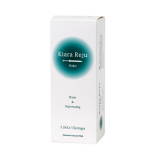
Kiara Reju combines three ingredients with different functions: hyaluronic acid supplies a water binding polymer, PDRN contributes DNA-derived nucleotide chains, and niacinamide is a form of vitamin B3. BioPlus presents this combination as a professional skin booster. Its emphasis is
skin quality, including hydration and the appearance of fine texture, rather than the strong projection associated with a contouring filler. [1]
The appeal of Kiara Reju therefore lies in the combination. An HA product, a nucleotide preparation and a vitamin-containing formula can share some vocabulary while having different material properties. Separating these ingredients explains what distinguishes Kiara Reju and why the word booster does not describe one universal type of product.
Hyaluronic acid brings water-binding material properties
Hyaluronic acid, usually shortened to HA, is a large carbohydrate polymer found naturally in the extracellular environment. Its repeating sugar units interact with water. In an aqueous preparation, the chains influence viscosity as well as hydration, so HA is relevant both to how a formula behaves and to its association with a supple appearance.
Those properties do not make every HA preparation behave like a structural filler. A crosslinked gel has a network designed to resist deformation and maintain a physical presence. A product positioned around skin quality addresses a different objective. The common ingredient name says little by itself about how much contour support the finished material provides.
This difference becomes visible in ordinary concerns. Fine lines that catch makeup on a dry surface are different from a hollow contour. Water-related changes can make skin appear less creased or more supple without creating a new facial outline. Both involve appearance, but they involve different levels of tissue and different material requirements.
A randomized split-face study by Duteil and colleagues illustrates how researchers separate these outcomes. The investigators assessed a noncrosslinked HA product against saline and included hydration, radiance and mechanical measurements. They studied M-HA10 rather than Kiara Reju, so the research supports the relevance of those measurements without supplying a Kiara-specific result. [2]
PDRN adds a nucleotide component
PDRN stands for polydeoxyribonucleotide. It describes chains of deoxyribonucleotides, the chemical building blocks associated with DNA. These are molecular materials, not living cells. Their presence in a formula does not mean that stem cells are being transplanted or that the product changes a person’s inherited genetic code.
Interest in PDRN concerns how nucleotide materials interact with biological processes. Research has examined cell proliferation, migration and signaling, including pathways associated with repair responses. This is a different rationale from HA’s ability to form a hydrated polymer environment. Calling both ingredients moisturizers would miss much of the distinction.
In a laboratory study, Shin and colleagues investigated PDRN in human epidermal keratinocytes and dermal fibroblasts. The two cell types showed different responses in ERK signaling, alongside changes in proliferation and migration. The finding is relevant because the epidermis and dermis perform different jobs; a biological ingredient need not produce one identical response in every cell population. [3]
That cell-culture experiment explains a research direction rather than measuring a finished Kiara Reju treatment. A change in a laboratory signaling pathway is not the same endpoint as a visible reduction in facial lines. The formulation combines a nucleotide component with HA, while the appearance of treated skin remains a separate clinical outcome.
Vitamin B3 means niacinamide in this formula
Vitamin B3 can appear under several related names. Kiara Reju’s listed ingredient is niacinamide, also known as nicotinamide. JDBIO identifies it alongside HA and PDRN in the product’s ingredient description. The supplied presentation contains three 2.2 mL syringes. [4]
Niacinamide is familiar from topical skincare, where researchers have investigated uneven tone, fine lines and other features of aging skin. In a controlled study by Bissett and colleagues, 50 women used a niacinamide-containing moisturizer on one side of the face and its vehicle on the other over 12 weeks. The investigators reported improvements in several measured appearance outcomes. [5]
The study concerned a topical moisturizer, so its results do not establish the same effects for a different professional preparation. Its relevance is that vitamin B3 has an established skincare research background. It introduces a complexion-related ingredient into Kiara Reju’s combination rather than simply increasing the amount of HA.
Niacinamide should also be distinguished from an exfoliating acid. Familiarity with the vitamin does not make Kiara Reju equivalent to a peel, nor does it make the professional formula interchangeable with a daily niacinamide serum. Ingredient identity, concentration, vehicle and route all influence the behavior of a finished preparation.
How the three components differ
The ingredients overlap in their association with skin quality, but their chemistry remains different. HA is a polysaccharide, PDRN consists of nucleotide chains, and niacinamide is a
small vitamin-derived molecule. Combining them does not turn them into one new ingredient or make their published findings add together automatically.
| Component | Material identity | Main area of interest |
| Hyaluronic acid | Water-binding carbohydrate polymer | Hydrated material properties and skin suppleness |
| PDRN | DNA-derived nucleotide chains | Cellular responses studied in repair biology |
| Niacinamide | Form of vitamin B3 | Complexion-related topical skincare research |
| Complete formula | Combination in a professional
preparation |
The behavior and performance of the finished product |
The combination is especially relevant when comparing a straightforward HA preparation with a product containing additional ingredients. More ingredients do not necessarily mean greater structural support. They indicate a different formulation approach, which should be understood on its own terms rather than ranked solely by the length of the ingredient list.
The 2.2 mL syringe describes the volume of the preparation, not the amount of each ingredient. Milliliters and milligrams answer different questions: one measures volume, the other mass. Two products can have the same syringe volume while containing different polymers or different amounts of an ingredient. Kiara Reju’s three-component identity therefore remains more informative than comparing syringe sizes alone, particularly when the alternative contains only HA or a different nucleotide material. [4]
Skin quality and facial volume answer different questions
Skin quality includes several features that people notice at close range: fine texture, a crepey appearance, dryness and the way light reflects from the surface. Facial volume concerns shape, projection and the distribution of fullness. A person can have one concern without the other, or experience both at the same time.
For example, a cheek may retain its overall shape while the overlying skin looks finely creased. Conversely, the skin surface can look smooth while the contour appears hollow. A formula positioned around skin quality and a gel selected for structural support therefore have different measures of success.
This also explains why a refreshed appearance does not always involve an obvious increase in size. A more even surface can alter the impression of brightness and smoothness while leaving facial proportions largely unchanged. Kiara Reju belongs in the discussion of this skin-quality objective through its combination of HA, PDRN and niacinamide.
Reading changes in appearance over time
Hydration, fine lines and visible tone should be observed separately. Skin may feel more supple without a measurable change in pigmentation. An improvement in surface texture does not, by itself, establish a measured increase in collagen. Each outcome needs its own description.
Lighting matters particularly for fine texture. Side lighting emphasizes small surface irregularities, whereas bright frontal lighting can hide them. Makeup, freshly applied moisturizer and camera processing also change the result. Comparing similar conditions makes a change easier to recognize than relying on an especially glossy photograph.
The same distinction applies to the word elasticity. Skin that looks less dry may seem more flexible, while an instrument assesses a specific mechanical response. A photograph, a subjective impression and a laboratory measurement can all be informative, but they should not be treated as interchangeable observations.
Frequently asked questions
Is Kiara Reju an HA-only product?
No. The listed combination includes PDRN, HA and niacinamide. HA explains the water-binding part of the formula, while the other components introduce different chemical identities and research backgrounds. Describing it only as HA leaves out two defining parts of the product.
Is PDRN another name for collagen?
No. PDRN consists of nucleotide chains, whereas collagen is a structural protein. Research into nucleotide-related cellular responses does not make the material itself collagen. The distinction matters when comparing a PDRN combination with products that contain collagen or other structural materials.
Is vitamin B3 the same as niacinamide?
Niacinamide is one form of vitamin B3 and is the form listed for Kiara Reju. The broader vitamin name does not identify every possible B3 compound. Niacinamide’s topical research should also remain distinct from claims about a complete professional formula.
Does HA automatically make it a volumizing filler?
No. HA can be used in preparations with very different physical properties. Structural support depends on the finished material, including its network and mechanical behavior. A skin-quality product and a firm contouring gel can contain HA while serving different aesthetic objectives.
Can ingredient studies predict an exact result?
They can explain why an ingredient attracts scientific interest, but they cannot assign a fixed result to every product containing it. A cell experiment, a topical cream study and a professional combination formula each involve different conditions and different outcomes.
What makes the combination distinctive?
Kiara Reju brings a hydrated polymer, nucleotide material and vitamin B3 into one preparation. That distinguishes it from an HA-only formula without implying that a longer ingredient list always performs better. Its defining feature is the combination and its skin-quality positioning.
Explore the Kiara Reju combination
Kiara Reju is most clearly understood through the separate roles of HA, PDRN and niacinamide. Professionals comparing the available presentation can explore ELE Global alongside their existing skin-booster range. The relevant comparison is whether this combination fits the intended skin-quality offering, with the finished formula considered as a complete product.
References
1. BioPlus International. Kiara Reju. Official product information. Accessed November 8, 2026.
2. Duteil L, Queille-Roussel C, Issa H, et al. The Effects of a Non-crossed-linked Hyaluronic Acid Gel on the Aging Signs of the Face versus Normal Saline: A Randomized, Double-blind, Placebo-controlled, Split-faced Study. Journal of Clinical and Aesthetic Dermatology. 2023;16(2):29–36.
3. Shin SM, Baek EJ, Kim KH, Kim KJ, Park EJ. Polydeoxyribonucleotide exerts opposing effects on ERK activity in human skin keratinocytes and fibroblasts. Molecular Medicine Reports. 2023;28:148.
4. JDBIO Co., Ltd. Kiara Reju PDRN. Official product catalog. Accessed November 8, 2026.
5. Bissett DL, Oblong JE, Berge CA. Niacinamide: A B vitamin that improves aging facial skin appearance. Dermatologic Surgery. 2005;31(7 Pt 2):860–865; discussion 865.