
Fitness
Muay Thai in Thailand and Efficiency
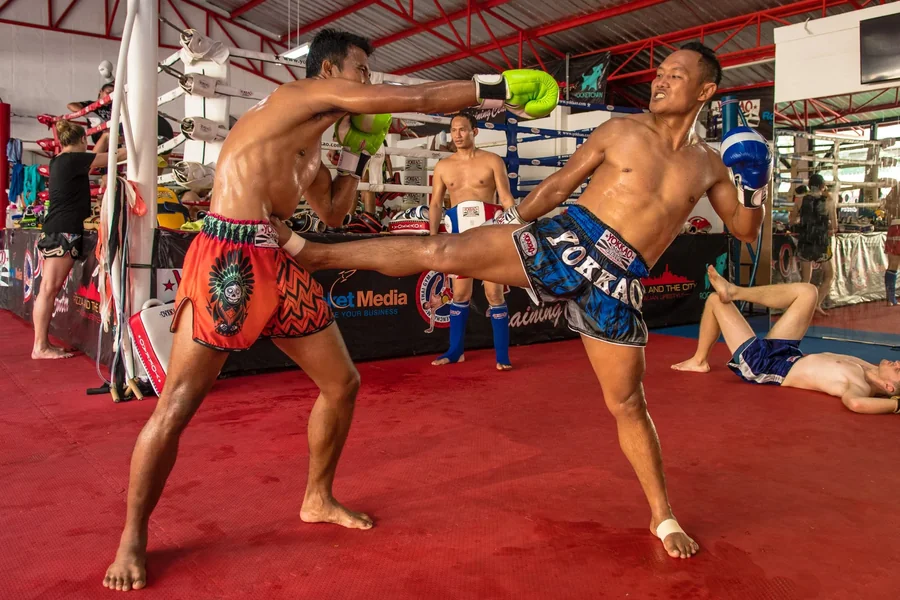
When you observe a novice practicing martial arts, their movements often appear rigid, exhausting, and segmented. They rely entirely on raw muscular effort to generate power, which leads to rapid physical fatigue. In stark contrast, an experienced practitioner throws strikes that look effortless, smooth, and devastatingly fast. This stark contrast comes down to a concept known as fluid kinetic efficiency. If you want to stop fighting your own anatomy and learn how to generate maximum force with minimum energy, a dedicated stint of Muay Thai training camp in Thailand is the ultimate solution. By training in the birthplace of the sport, you can systematically dismantle bad habits, unlock your skeletal leverage, and master the science of human motion.
Driving Force from the Ground Up Through the Kinetic Chain
True striking efficiency begins with a fundamental understanding of physics. Your arms and legs are not the primary source of power; they are simply the delivery mechanisms. Real force is generated by pushing off the ground and transferring that energy upward through your skeleton, a process sports scientists call the kinetic chain. When you throw a standard roundhouse kick or a cross punch, your coaches in Thailand will constantly remind you to pivot your standing foot and drive your hips forward. Research into combat biomechanics shows that correct hip rotation can increase absolute striking power by up to 40 percent while drastically reducing the metabolic strain on your shoulders and limbs.
Mastering the Art of Eight Limbs and Weight Distribution
Muay Thai is uniquely celebrated as the art of eight limbs because it requires you to seamlessly coordinate punches, kicks, knees, and elbows. Managing these various weapons efficiently depends heavily on your stance and shifting weight distribution. If your weight sits too far forward, you cannot check incoming kicks; if it sits too far back, your punches will lack functional reach. Top tier Thai camps focus intensely on this balance during daily shadowboxing and mirror work. By achieving a fluid, responsive stance, you can switch between offensive strikes and defensive evasions within milliseconds, ensuring you conserve valuable oxygen over a long workout. Muay Thai camp is a good workout with efficiency.
Capitalizing on High Performance Tropical Conditioning
The environment in which you train plays a massive role in how quickly your body adopts fluid mechanics. Training in Thailand means performing in an open air camp with an average daily temperature of 31 degrees Celsius and humidity levels that routinely cross 80 percent. This challenging climate demands a massive energy output, burning between 800 and 1,200 calories per ninety minute session. Within ten to fourteen days, your body adapts to this thermal stress through a biological process known as plasma volume expansion. Data confirms that heat acclimation can expand total blood plasma volume by up to 15 percent, which lowers your resting heart rate and boosts cardiovascular efficiency.
Muay Thai in Thailand is more than a combat sport; it is a disciplined system that builds efficiency in movement, training, and mindset. Known as the ‘Art of Eight Limbs,’ it uses fists, elbows, knees, and shins, making every motion purposeful. Training in Thailand emphasizes repetition, conditioning, and economy of energy, teaching fighters to strike effectively while conserving stamina. Those interested in learning more about discipline, performance, and personal development can also explore informative content on gramernest.com, where a variety of practical and engaging topics are discussed.